

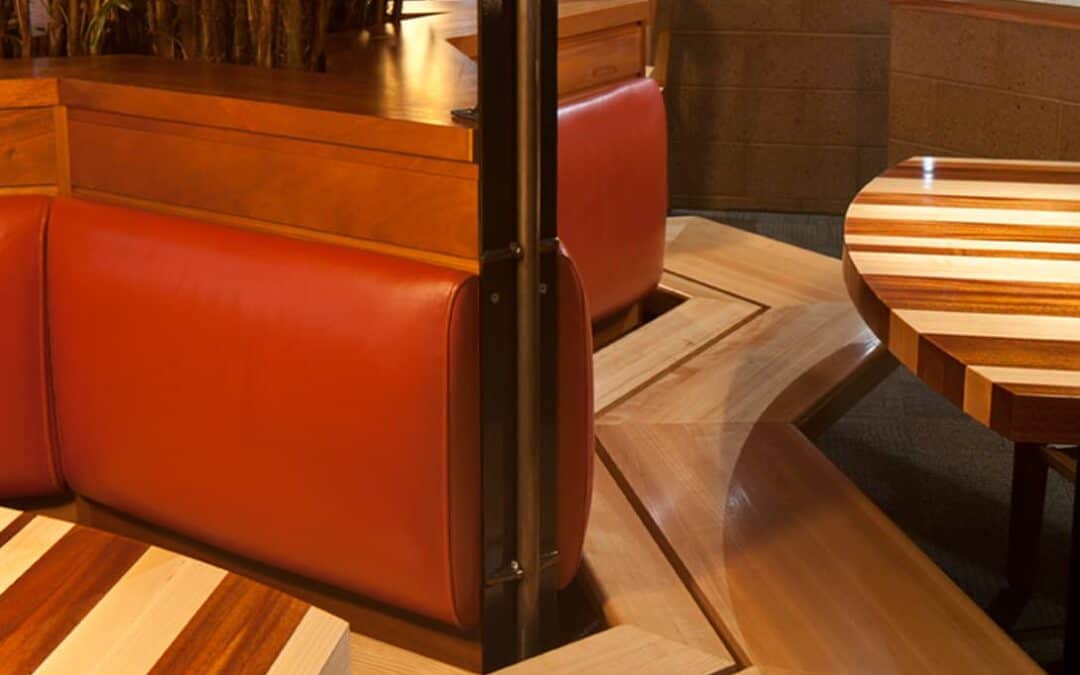
Are you thinking about a restaurant remodel? With so many types of woods and wood finishes on the market, choosing the proper materials to complete your renovation is essential. The right wood will withstand the wear and tear of daily restaurant activity while still complementing your overall style. Join the experts from Mock Woodworking below as we share our top restaurant millwork tips!
Millwork Factors to Consider for Your Restaurant Renovation
There are a handful of details to consider when approaching a restaurant renovation. High-traffic environments require materials that can withstand daily wear while maintaining their appearance and functionality. Understanding key millwork factors, such as durability and maintenance, helps ensure your restaurant remodel is built to perform long-term without sacrificing style.
Choose Spill-Resistant Wood Finishes
Spills are inevitable in the restaurant industry. But you can avoid long-term stains by including spill-resistant wood finishes in your restaurant remodel. Selecting spill-resistant finishes is essential when planning restaurant millwork for tables, bar tops and service counters. Protective finishes such as polyurethane create a sealed surface that helps prevent liquids from absorbing into the wood. When you use spill-resistant finishes, you not only reduce staining from food and drinks but also make daily wipe-downs easier.
Use Moisture and Heat Resistance in Dining and Bar Spaces
Restaurant millwork that is near a bar, kitchen or restroom will face the challenge of moisture and heat. Consistent exposure to humidity, steam and temperature fluctuations can cause wood to expand, contract or warp over time if it is not properly protected. To avoid this issue, make sure your restaurant renovation takes into account the need for proper wood selection, sealing and finishing. Well-designed restaurant millwork accounts for these environmental factors from the start, ensuring your remodel maintains both structural integrity and appearance over time.
Plan for Easy Maintenance and Long-Term Upkeep
The food industry moves fast – your custom millwork should be able to keep up. Restaurants benefit most from woodworking solutions that are easy to maintain and repair. Woods and finishes that allow for spot repairs or refinishing help minimize downtime and long-term costs. When designing custom millwork for restaurants, it’s important to consider how surfaces will be cleaned daily and how easily they can be refreshed to maintain a beautiful, long-term appearance.
Balance Style and Durability
While durability is critical, your restaurant remodel should also support the overall design and brand identity of the space. Whether the style is modern, rustic or industrial, the chosen wood and finish should enhance the atmosphere while enduring heavy use. Custom millwork for restaurants allows designers to strike the right balance between visual appeal and functional performance, creating inviting spaces that last.
Best Wood Types for Restaurants
When thinking about custom millwork for restaurants, selecting the right wood is essential for creating spaces that are both stunning and durable. High-traffic areas demand wood that can withstand daily use, spills and frequent cleaning, while also complementing your restaurant’s style. From classic hardwoods like oak and maple to premium options like walnut and hickory, selecting the right materials and finishes ensures that custom millwork performs reliably while maintaining its aesthetic appeal.
Oak
Oak is a favored choice for restaurant tables, chairs and flooring thanks to its durability and classic appearance. With a Janka hardness of 1,290 (red oak) to 1,360 (white oak), it withstands wear and tear in high-traffic areas. At the same time, its pronounced grain pattern adds visual character and helps hide minor scratches over time. Oak also handles stains and finishes well, making it a versatile option for a wide range of restaurant millwork.
Maple
Maple boasts a uniform grain, smooth texture and exceptional durability. With a Janka hardness of 1,450, it is harder than many other common hardwoods, making it highly resistant to everyday wear in busy dining areas. Maple’s light-colored appearance gives tables, bar surfaces and seating a sleek, modern look. Meanwhile, the smooth grain makes it easy to apply stains or clear finishes that protect against spills and moisture. For custom millwork, maple offers both functional strength and a versatile design that your restaurant renovation needs.
Walnut
Walnut combines elegance with durability, making it ideal for high-end restaurant millwork. Its rich, dark brown color and striking grain pattern create a luxurious look that works well for bar fronts, statement tables and decorative accents. With a Janka hardness of 1,010, walnut is strong and ideal for intricate custom millwork. Walnut surfaces also take finishes beautifully, enhancing their natural warmth and creating a sophisticated, long-lasting environment that will elevate your restaurant remodel.
Hickory
Hickory is one of the hardest domestic hardwoods, boasting a Janka hardness of 1,820. This makes it perfect for restaurant millwork, as it can withstand heavy foot traffic and frequent furniture movement. Additionally, hickory’s rustic grain adds character to any space, working especially well in casual dining environments. For any upcoming restaurant renovations, hickory delivers unmatched performance, offering longevity, resilience and style.
Partner With Mock to Bring Your Restaurant Millwork Vision to Life
Ready to get started on custom millwork for your restaurant remodel? The Mock Woodworking team is here for you. Contact us today to get started!